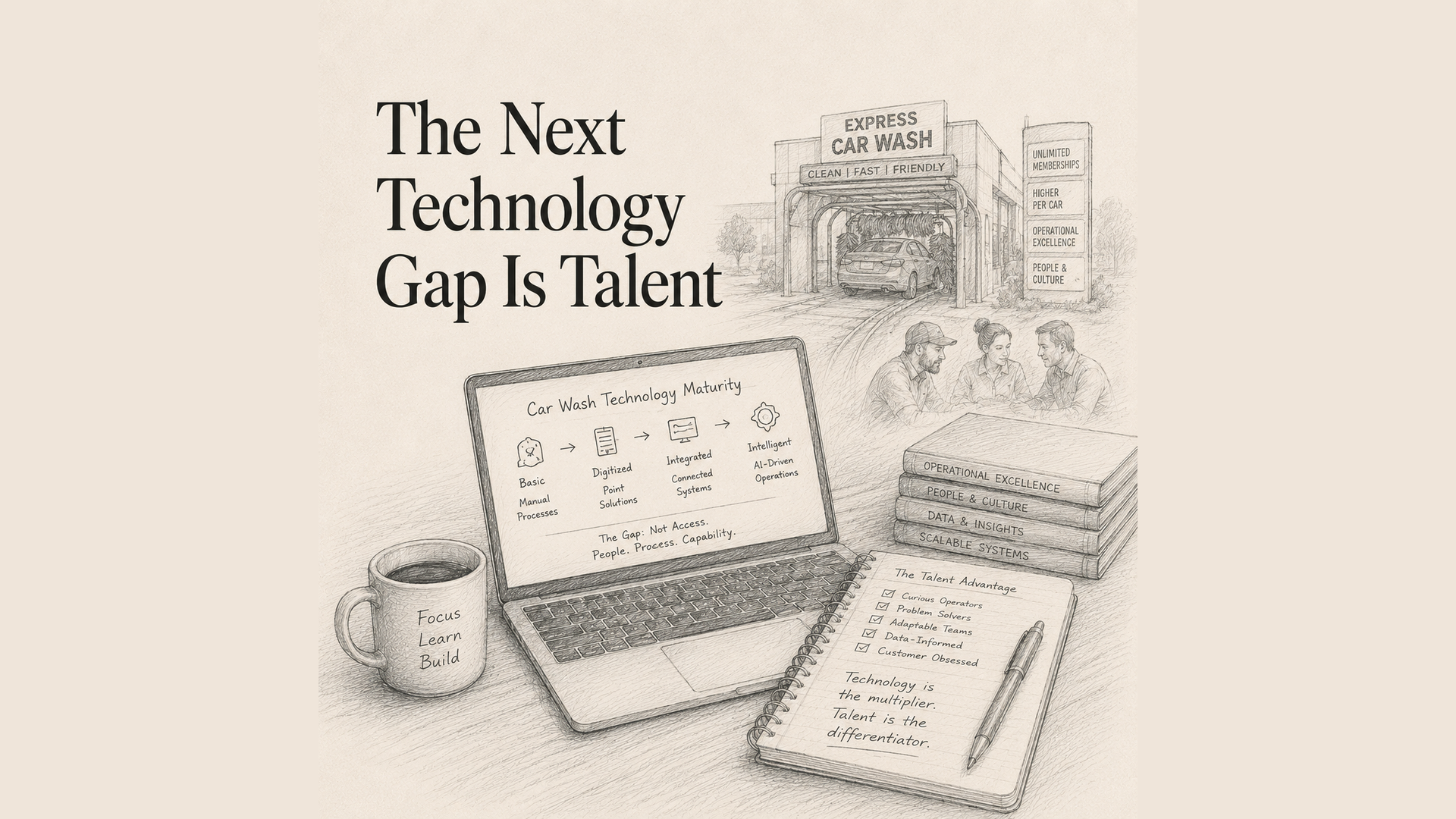
For as long as I have been in the car wash industry, people have said we are ten years behind in technology. That used to be an easy argument to make.
A lot of operators were running on disconnected systems, spreadsheets, manual processes, and reports that were already outdated by the time someone opened them. Marketing was often planned one promotion at a time, customer communication was limited, and most of the useful information lived in the heads of a few experienced people.
That is not really where the industry is anymore.
Car washes now have access to better POS systems, CRM platforms, automated lifecycle marketing, online purchasing, membership analytics, AI tools, and more operational data than most teams know what to do with. The industry did not slowly catch up. In a lot of areas, it jumped forward quickly.
The problem is that buying technology is easier than changing how a business operates.
From 2021 through 2024, a lot of growing wash companies solved problems by hiring more people. They added roles in marketing, membership, customer experience, analytics, training, and operations because there was enough growth to justify it. More locations created more work, and more work created more jobs.
Now the industry feels like it is entering a different phase. Companies are still growing, but there is more pressure to get better results from the teams and systems they already have. Roles are being combined. Internal people are being asked to take on broader responsibilities. Leaders are looking harder at what software actually saves time, drives revenue, or makes the operation easier to manage.
That is where the next technology gap will show up.
It will not be between operators who have software and operators who do not. Most serious operators will have access to similar categories of tools. The gap will be between companies that know how to use those tools inside their existing operation and companies that keep adding technology without giving anyone clear ownership of the result.
A CRM does not create a customer strategy by itself. A dashboard does not make a decision. AI does not fix a broken process just because it can produce an answer faster. Someone still has to understand the business, know what matters, and turn the tool into something useful for the people running the wash every day.
Technology companies have a responsibility here too. The answer cannot always be another platform that requires a new specialist, a long implementation, and three more meetings every week. The best products will fit into the teams operators already have and help those teams do better work without making the business more complicated.
I do not think the car wash industry is ten years behind anymore. The technology is here.
The real question is whether we can build the people, ownership, and operating habits needed to get the value out of it.